
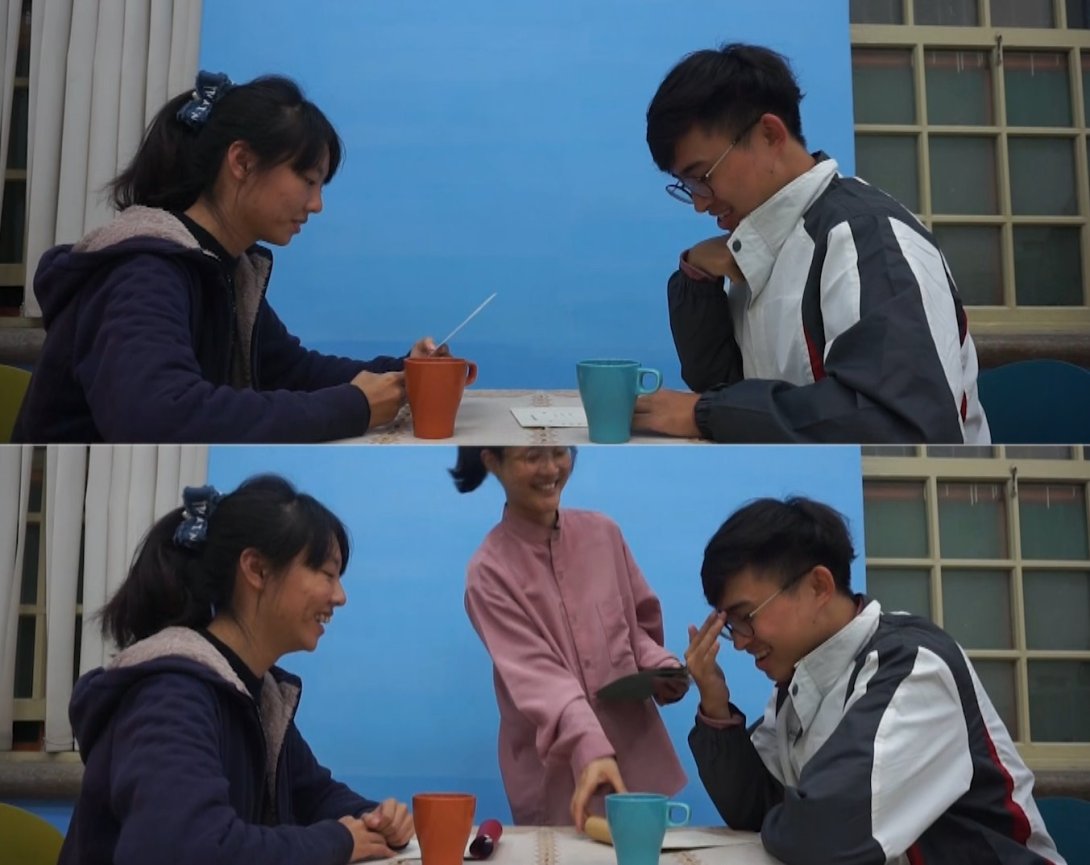
Experience design aims at creating meaningfulness in users’/human’s life through shaping or creating products, services, or systems. This semester, our topic was “interpersonal experiences.” We studied the history of communication technologies, interpersonal psychologies, and the basics of qualitative research. This semester was special because we had over 60 students in 13 teams in the class. As a practice-oriented seminar, this was not easy. However, we had excellent achievement. Let us look at our projects.
Projects
The Retrofit Project of Our Studio (by 劉旻昀 陳語芊 楊迦茵 張硯涵 葉珮涵)
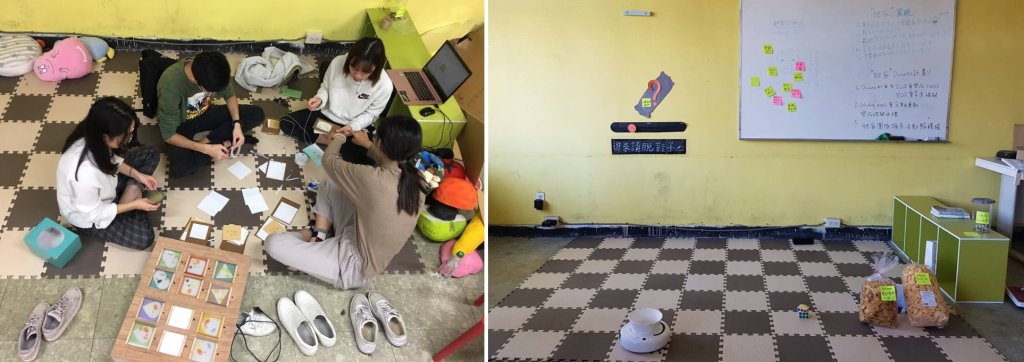
Students need a better atmosphere in their working space, while their current availability was a studio with chaos – unorganized desks, chairs, and refuse. Designers found that the students working in this poor studio had no motivation to stay. They might go there to work, but that is all. They neither enjoy their work nor savour the interaction with other students. After the revival work by the Designers, who was also part of this studio, now students get a better-organized space and a particular area for communication. They have a robot cleaning this area and delivering snacks, some delightful accessories like pillows and small tables, and a “wishing pool” to collect funding to keep the sustainability of their new studio.
The Friendship Magazine (by 林家榛 張庭瑋 陳映舟 蕭柔 林意喬)

The idea of this project is to publish a magazine in which friends undergo special events and broadcast their unusual experiences with their partners to the readers. Five pairs of friends participated in this project. To each pair, the designers selected a special event. To designers’ reflection, the events were selected by their different levels of unexpectedness to explore how friends would struggle together to “survive.”
Exchanging Breakfast (by 錢信達 羅名媛 劉宜萱 蔡淳芳)
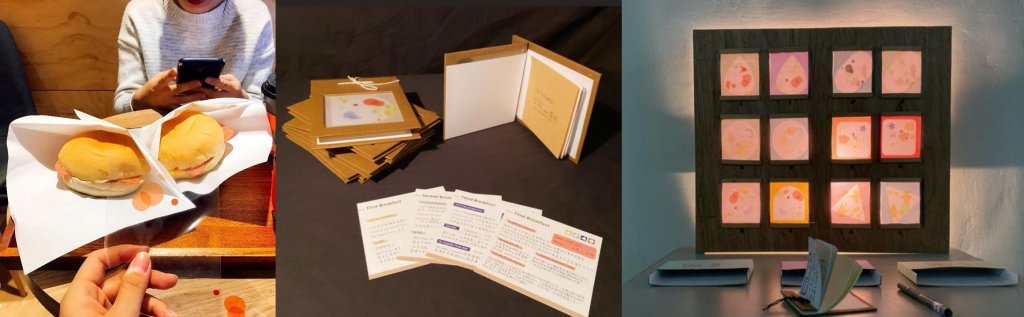
Exchanging business cards may be the “formal way” to know somebody for the first time. But how about the students in a design school? Yap, we communicate about our creative ideas and design philosophies, but would that represent us as humans? While design students often work late at night and, therefore, do not wake up until the noon, having an event to eat breakfast can be a good idea to promote interpersonal communication, as well as health, in a design school. In this project, each participant gets a card which divides them into 2er-groups. In the following three days, they will have breakfast together. As an inspiration for “designers,” participants receive cards with a shape on them to find the foods in a similar shape. After three times of joint breakfast, on the final day, the participants will have breakfast with their partner, but, based on their interaction in the previous days, they have to prepare the breakfast for their partner – What would be the proper shape of the foods for my partner?
Making Friends in Taiwan (by 陳宣蓉 林佳儀 洪彩恩 張心洛 楊宜清)
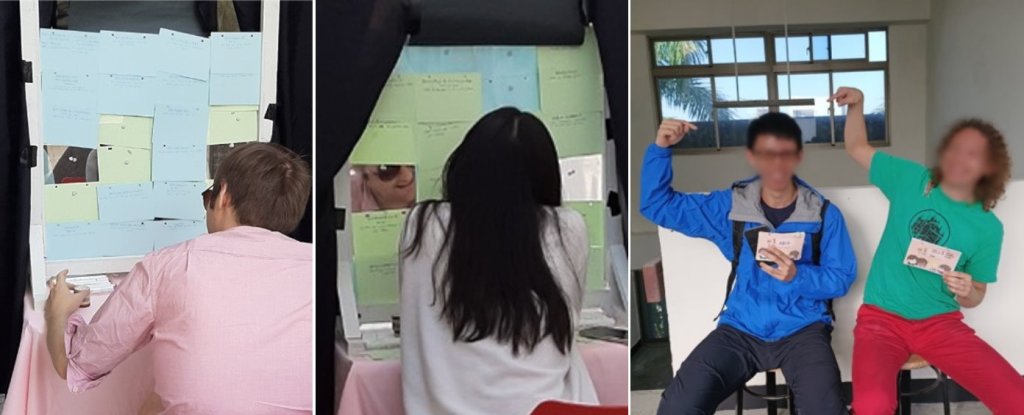
NCKU is a university having more and more international students. The university is located in an old city with various delicious foods, friendly citizens, and many cultural attractions. However, surviving here without the ability to speak Taiwanese or Chinese is almost impossible. Therefore, friendship is definitively the most important part of international students’ stay. The designers organized a social event. International students, as well as local students, were invited. The organizers grouped participants into pairs and each pair contain one foreign and one local student. The pairs were guided to a room and sit at a table and in front of each other. But they can still not see each other, because a glass covering with question cards is seated between them. The questions were designed to help the pair to know each other. Some questions are easy, and some are entirely personal. The participants took down one card each time and asked the question on the card. By removing the cards on the glass, the pairs could see each other. The more questions they had answered, the more they could see each other. Finally, they could collect the cards and… win the friendship!
Topic Restaurant (by 楊郁葇 許祐庭 方藝璇 張綺珍)
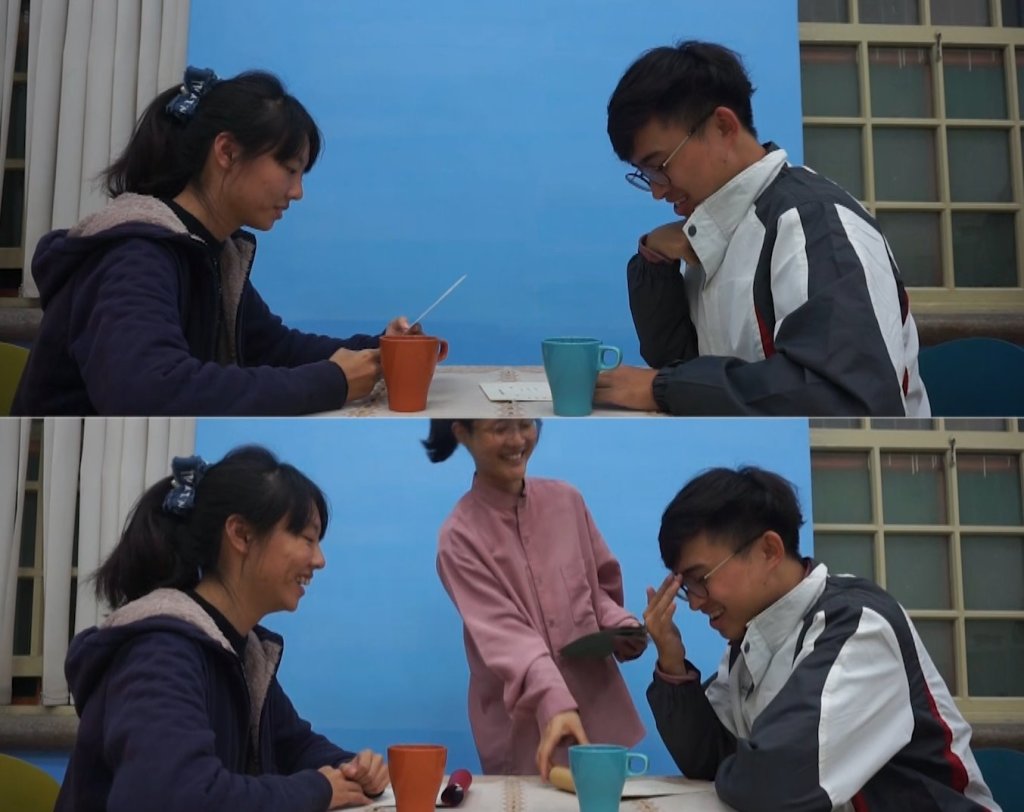
Not everyone is active in social activities. Often, when one’s value is inconsistent to society, one tends to avoid unnecessary social activities, such as talking to strangers. The dispute of values is frustrating, especially when the others consider theirs as “general.” But, what is, if we can uncover those values before a social activity starts? Topic Restaurant provides this opportunity. You can sit together with a stranger there. Before you start a conversation, the waitress would come to making your orders. However, no menu is provided. She shows up with a menu in hand and a “sharp” question, “would you prefer to spend your rest of life with a mermaid or a reverse mermaid” – a question making non-sense. In this case, the waitress is the one breaking the “common” social value by giving a “weird” situation. Still, you and your guest have to react. By observing the reactions of your guest, you might know whether you should do more self-disclosure or “behave normally” in the rest of your interaction.
The Embarrassing Moment in the Corridor (by 林芷妡 袁睿紘 方芊文 羅淇馨)
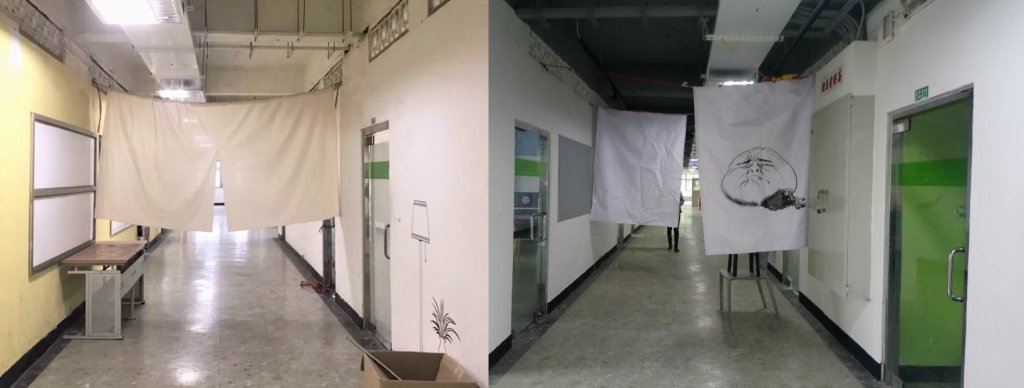
We have a long and straight corridor in the department, where design students shuttle and meet each other every day. For our designers, it is often a confusing moment, where they are engaging with another person. Image the situation as following: You see your classmate coming towards you. Your eye contact starts where you are still 10 meters far from each other. Would that be the moment to say ‘Hello’? If not, you keep walking and considering, ‘and now?’ After some seconds of silence, you feel the atmosphere terrible. It seems that you both are not interested in each other, you are not friendly, you are like strangers, … So you decide to say ‘Hello’ or wave your hand to your classmate at the first moment. Now you start a kind of interaction and have 60 seconds until you pass by her/him. What should be said or done then?
A long and straight corridor does not seem to be friendly-designed for social interaction. Therefore, the designers applied some strategies and cut the corridor into smaller sections to change the experience of social engagement.
A Device for Escaping from Overselling Clerks
(by 張盺荷 楊士玠 劉芃成 蔣念澄)
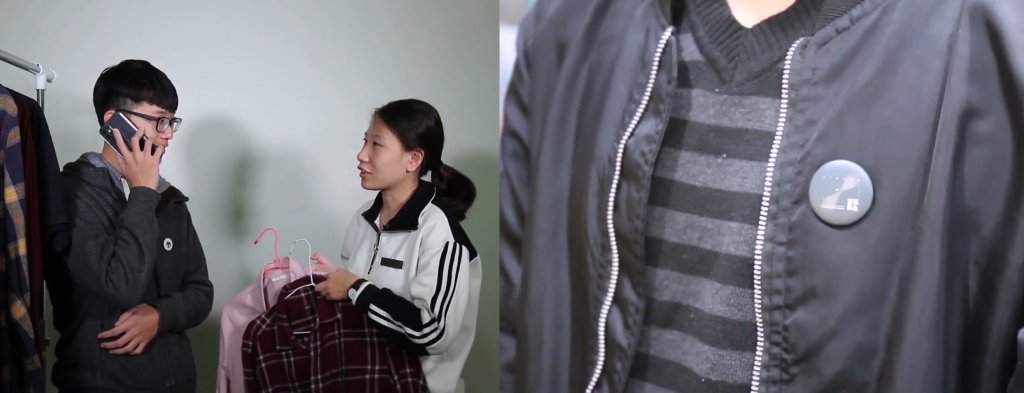
We enjoy shopping and exploring new stuff in stores. However, sometimes, a store clerk with a great passion for selling things destroys your pleasurable moment. She/he shows up and introduces ALL their products to you. You want to stop her/his endless talking, but you can’t. Then, you want to leave, but interrupting the clerk’s talk is, to you, impolite. There is no way to escape.
The designers conceptualize a wearable device. It is placed on your jacket and looks like a common decoration. When you are trapped by an overselling clerk, you can touch your secret device. This triggers your smartphone to ring. Answering your phone is, in any case, not an impolite or unnatural behaviour. When answering the phone, a dummy is talking and asking you about random questions. You can answer those questions and see whether the clerk would leave you. If not, touch your device again, and the dummy will speak loud and provide an emergent situation. Now, you are pretty sure that the clerk is aware of your “situation,” and you are free to go!
Reversed-PanToh – An Reversed Way to Eat “Together”
(by 陳奕瑞 林祐生 洪逸 何俊憲 林子瑜)
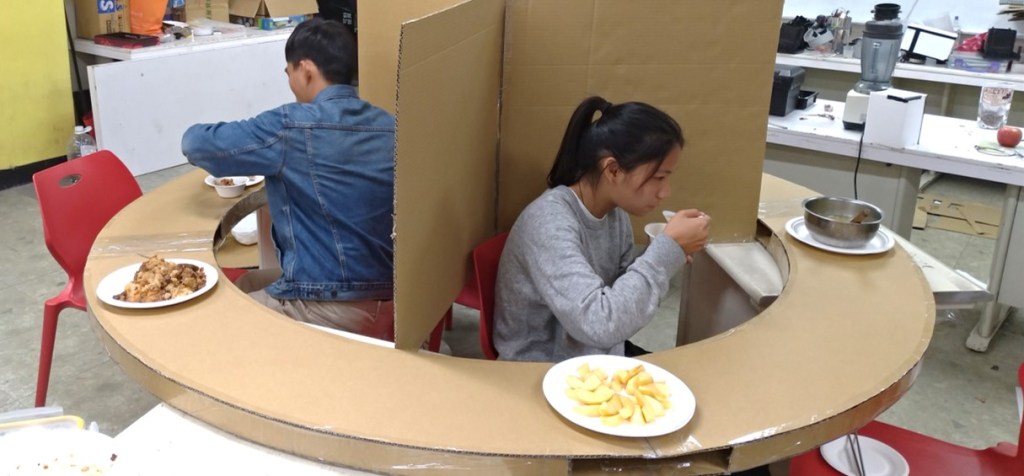
PanToh is a traditional activity in Taiwan. People like to celebrate and eat together. PanToh means “organizing the table” and implies preparing many foods on the (often rotatory) table for the celebration. While this is an old tradition and people usually have to accept the host’s invitation, not everyone likes to join such event. As a critical design, the designers reversed the shape of the table and created an alternative experience of eating together. Now, their table is a circle which surrounds the participants. The table is still rotatory so that everyone can get the food she/he wants. Now, the participants sit close to each other but have their private eating area —an alternative strategy to keep personal space when people have to maintain the tradition.
Image (by 賴郁仁 張嘉齊 曾昱崴 張倍華 張維剛)
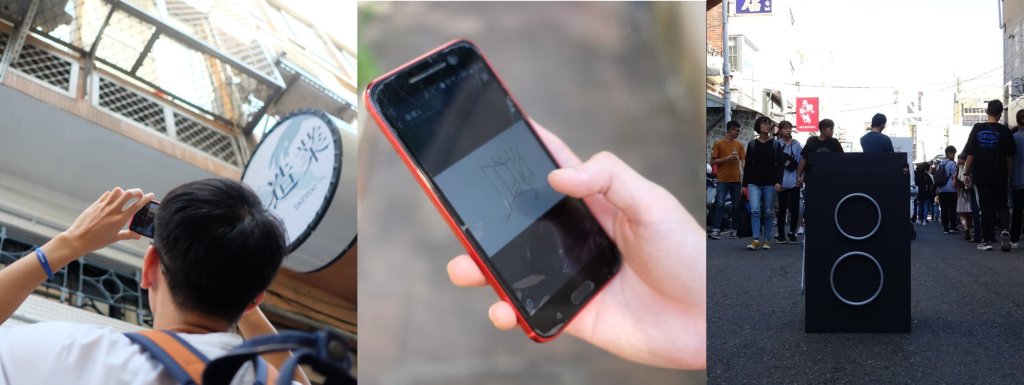
Modern life pushes us to walk faster, achieve faster, and even live faster. As a result, we seldom slow down to see what the living world is. We just get used to it. The designers conceptualized a gamely APP that allows people to observe their surroundings. A couple of people start the game. She/he takes a picture of a sight, which she/he finds unique, interesting, or inspiring. Then, she/he makes a quick drawing of the image. The drawing will be published as a challenge. The one taking the challenge has to find the original place of the drawing and takes a picture of it. If the challenger successfully sends back the wright image, she/he gets the chance to create a new challenge.
A Personal Experience in Fitness Studio
(by 程子祐 吳致憲 謝志群 劉芳瑀 陳建均)
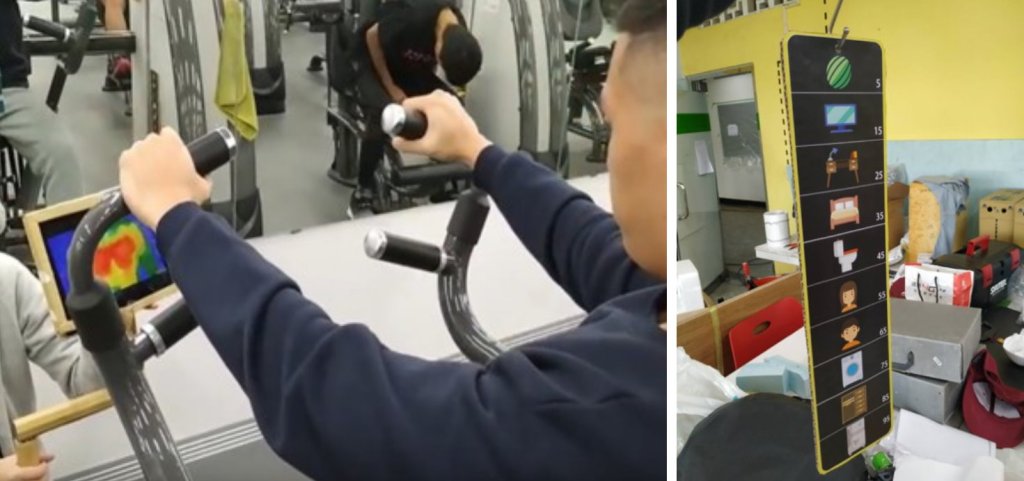
Experiencing the self is what people working hard in fitness studios like to do. Here are two designs enhancing this kind of personal experience. The first one is a functional solution. It is a thermal monitor capturing your muscles, allowing you to check the performance and to reflect on the body. The second one is a symbolic solution. It is a series of icons attaching on the weights of a lifting machine, representing the meaning of the weights. For example, the symbol of a girl is marked on the weight level of 40 kg (or 50? we don’t know) and a washing machine on 70 kg.
A Book for YOU (by 周詩鏇 王郁婷 翁嘉鴻 陳韋瑄)
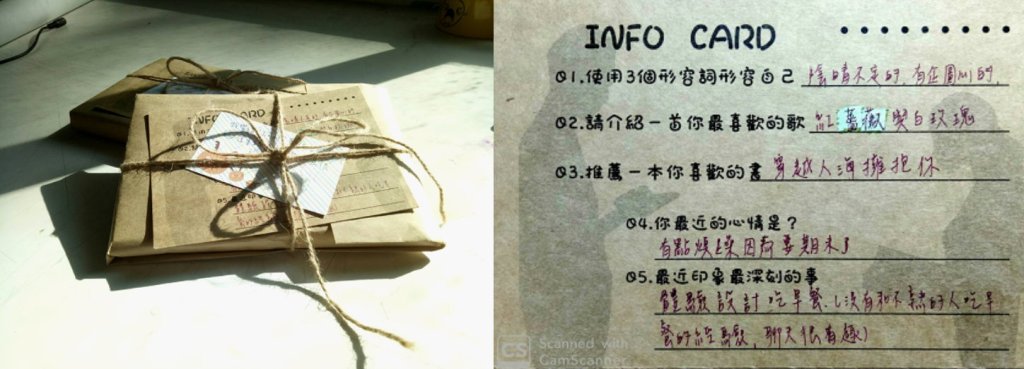
The designers were trying to create an interpersonal communication through books. There are many romantic stories in which people meet interesting strangers through books. The designers first invited several participants. They were asked to fill an info-card to reveal themselves anonymously. Randomly they will then get one card from the pool and should try to select a book, according to the information on the cards, for the card owner.
A Movie Night (by 彭程 許庭瑜 鄭以欣 陳予柔)
A Movie Corner (by 李建承 周玟璇 陳冠志 張雅評)
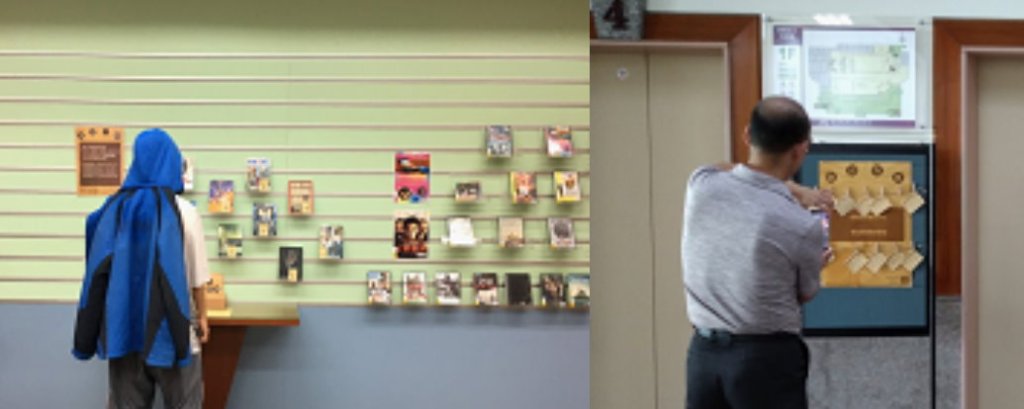
The manager of the media centre in the library is trying to encourage students to use the resource there. However, the media centre is on the basement floor of the library, and people seldom pass by. At the same time, there are a little number of frequent users of the centre. They like to watch movies there, and, actually, they would like to share their experience with other people. For the media centre, the designers designed a “manual” recommendation system. Users of the media centre can suggest a movie on a ticket-like card with numbers. Some suggestion words are given on the card, such as “for those who like solving puzzles.” Then, the suggestions cards are presented in the lobby of the library. People can pick up a card if the words attract them. They then go to the media centre, by matching up the number on cards, they can find a movie that is recommended to them.
Course Description
人的生命很難因物質的擁有而得到其價值,在我們生命中獲得真正的富足感與價值感,來自於生命中所體驗到的種種。然而,人的內心並非封閉,我們之所以能夠擁有豐富的生命體驗,來源只有二:人與人之間的以及人與物之間的交流,而這兩者除了物質(科技)的設計相關之外,完成體驗的核心因素 更多是人的動機。人類動機是否屬於絕對的自由意志,這是百年來無解的問題。然而,當我們實事求是地思考:人類動機的問題事實上不在於其自由與否,而是在於它是否能夠被改變。人類一切傳說、故事乃至於電影等題材中的人物之所以引人入勝,正在於他們在故事中發生了自我改變(self-transformation),這種改變才給予了讀者、觀眾一種破繭而出、迎向生命意義的感動。 於此,我們自問:人類動機是否可能透過體驗設計來塑造?是否可以透過外界物質的型態來輔助、增強或是反轉?很顯然,我們無法期待一個產品可以讓所有人都得到同樣的「效果」,而這種強求也是不合情理的。然而,體驗設計關注的是生命的動態與未知的可能性。
人類的行為極其複雜,古典心理學家以模型方法來解釋心理現象,並企圖透過這種「分析」來解除人類的心理「缺陷(疾病)」。當代心理學家採取了另一種態度,他們認為,人類心理疾病固然需要予以解決,然而,這當中並沒有追尋幸福(well-being)的保障。當代心理學家相信,幸福是可以習得的,心理模型因此不僅僅只用於描述「正常人」,更應該用於描述那些特殊的/成功的/快樂的人與事。透過向他們學習,人類才開始追求自己的幸福。這種向幸福者學習的態度亦是體驗設計的方法原則。它以人類行為理論為基礎、以理解使用者之行為動機、美感需求以及行為意義而進行之產品/服務設計。本課程透過理論與實務引導設計學生培養洞察力與同理心,理解知識理論在設計中扮演的角色,透過為真實的對象付出努力以明白設計的價值與社會意義。
這是一個UX(user experience)的時代,無論在市場上、或是在設計界的討論中都充斥各式各樣的討論。然而在這裡,我們將勇敢地捨棄user一詞,取而代之的,我們將退一步談論並聚焦在人類體驗(human experience)上。我們把UX中User的U,換回到human的u,如同取experience的第二個字母x一樣,我們使用的是小寫的、然而更加廣義的ux (可以說,我們避免刻意地把設計放在第一位;我們認為,設計之成功,經常必須採取的反而是降低自身的策略。) 相對於傳統的設計觀點,我們相信使用者 「 做 」 設計。使用者採用、使用並且試用各種不同的器物來設計他們的生活,而且更重要地,他們以此成就屬於自己的愉悅狀態。我們設計師做的,則是創造各種器物、展現「材料」提供給使用者進行設計,並提出某種建議與指引。為此,我們需要大量的、關於人類幸福的知識。原則上,這並不困難。然而我們的困境是:如果連設計師自身都生活在一種「不滿」的狀態中,我們從何提供具有說服力的材料給使用者呢?因此,在本課程中的第一個首要任務是,我們必須要先能善用自己的設計力、知識以及創造力來設計我們自己的或是自己身邊的人的生活,從此我們才能真正理解設計的力量與極限、還有潛力與責任。我們期待學生透過本課程將獲得設計中所需的專業信心以及「去創造屬於自己的設計」的設計動機。
 xtdesign.org