

In the Experience Design course, you’ll discover how design can enhance people’s long-term well-being and promote sustainability within social and cultural experiences.
(Bachelor+Master course) 2018 – on-going.
Experience Design is about creating meaningful, sustainable, and persuasive innovations. By understanding authentic human motivations and psychological principles, you’ll learn how to develop creative design concepts that positively transform everyday experiences, encouraging healthier, happier, and more sustainable lifestyles.
This course is interdisciplinary, blending interaction design, positive psychology, user experience (UX) research, philosophy of technology, practical technical skills, and qualitative research methods. You’ll engage equally in theoretical learning and hands-on practical projects. The course emphasizes real-world experience, encouraging you to actively explore and reflect on professional design practices in authentic contexts.
Each year, we introduce different inspiring themes—such as technological innovation, sustainable design, social responsibility, and behavioral design—offering exciting opportunities for you to explore contemporary issues through design.
Throughout the course, you’ll conduct field research to inform your design proposals, refine your ideas based on psychological insights and technological understanding, build prototypes, and evaluate your designs through users’ experiences.
Join us in creating designs that inspire meaningful change!
Gallery
click to see the selected students’ works
>> 2025 : Pixel Badlands (113下)
>> 2024 : Design of a Humanistic Landscape (112下)
In 2024, we created a series of installations that aim to make a rural landscape meaningful to the visitors. Following Burckhardt’s methodology of Strollology, we walk into the rural area in ZuoZhen and document our experience of the wild.

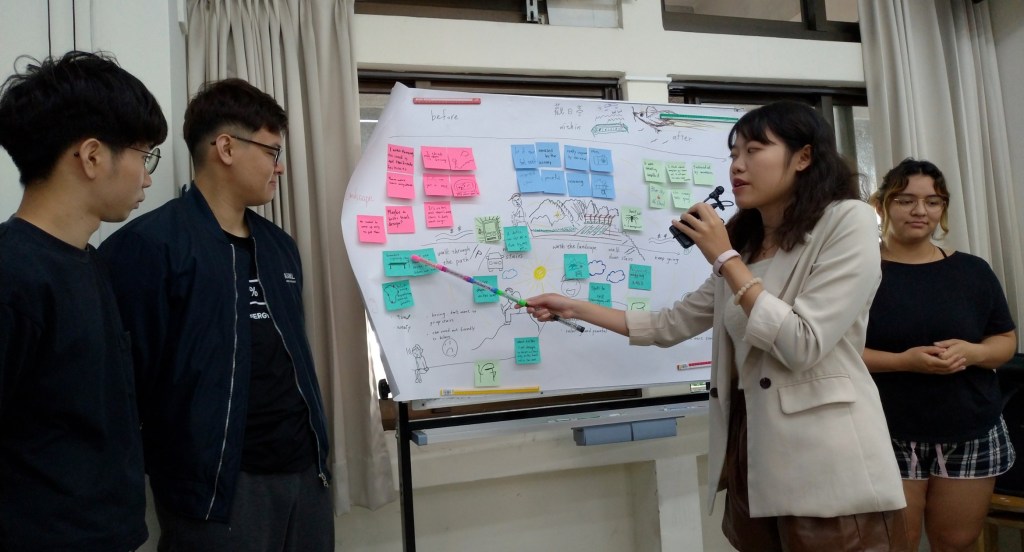
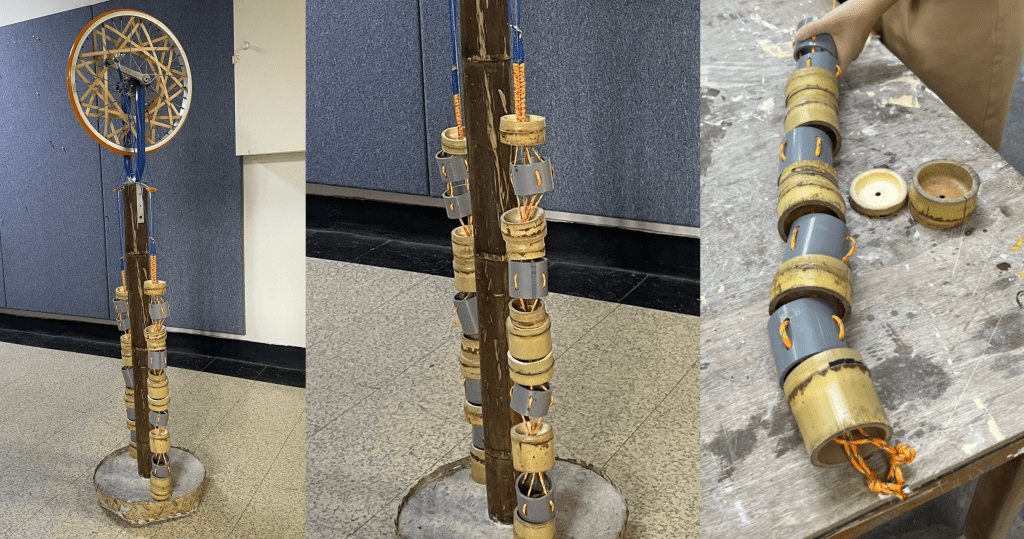
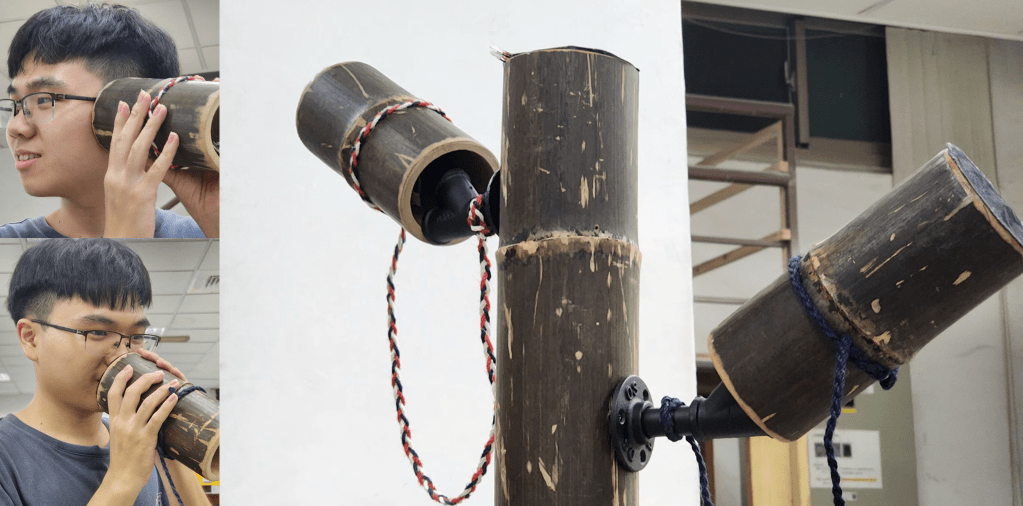
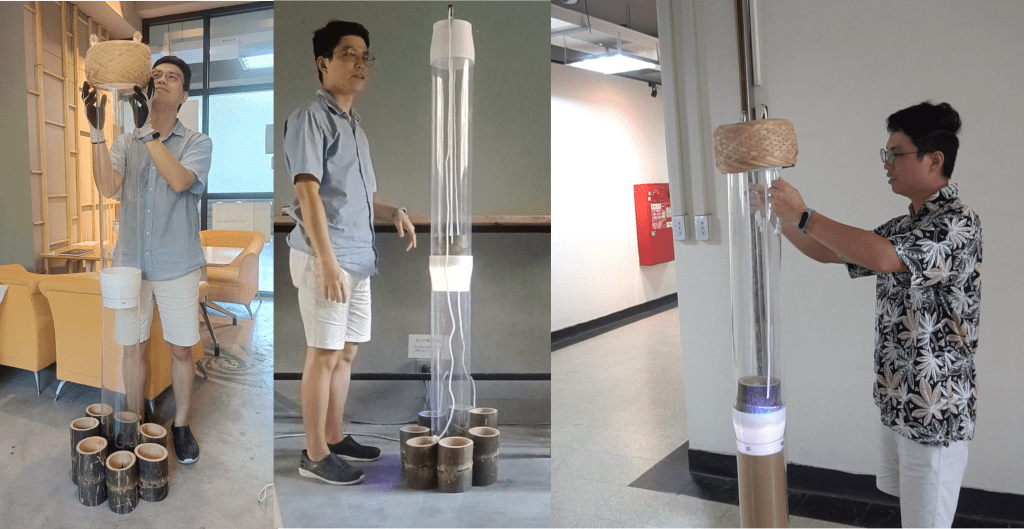
The students also learned about the bamboo material and the skill of interactive prototyping with Arduino and the production of electric circuits. Finally, in an 18-week project, students presented their interactive installations as part of the landscapes that tell visitors about the stories of this rural area.
My lab students and I re-designed and rebuilt one of the concepts and installed our final work in the abandoned elementary school in this rural area.
學生作者: 王郁貴、廖佑翔、簡致群、蘇泳晴
設計與技術指導: 簡瑋麒
other design works from the students (selected)
>> 2023 : Design for Behavioral Transformation (111下)
Power-OFF (黃乙芹、李怡萱、劉昌翰、林羽宸)

Although many of the power extension cords provide separate switches for us to turn on/off the corresponding devices individually, most of the time, we just leave all of them on and let the standby status consume energy. An alternative design in this project tries to tell a story and motivate users to do something different. Overall, the cord looks like a bus with the socket on the back and the switch on the front side. Tiny figures showing in the window of the front side reveal the status of each socket.
Family Light (2022, 簡致群、宋昕恩、巫瑋其)
Water-Saving (2022, 朱姮諭、徐于婷、鄭宇伶、林欣意)
>> 2021 : Experience ZuoZheng (110上)
2021’s Experience Design is working with our USR project. (under construction)
>> 2020 : Shaping Interpersonal Experience (109上)
Talk-To-Strangers in an Elevator (2020, 江承旭、張振淙、洪日昇)
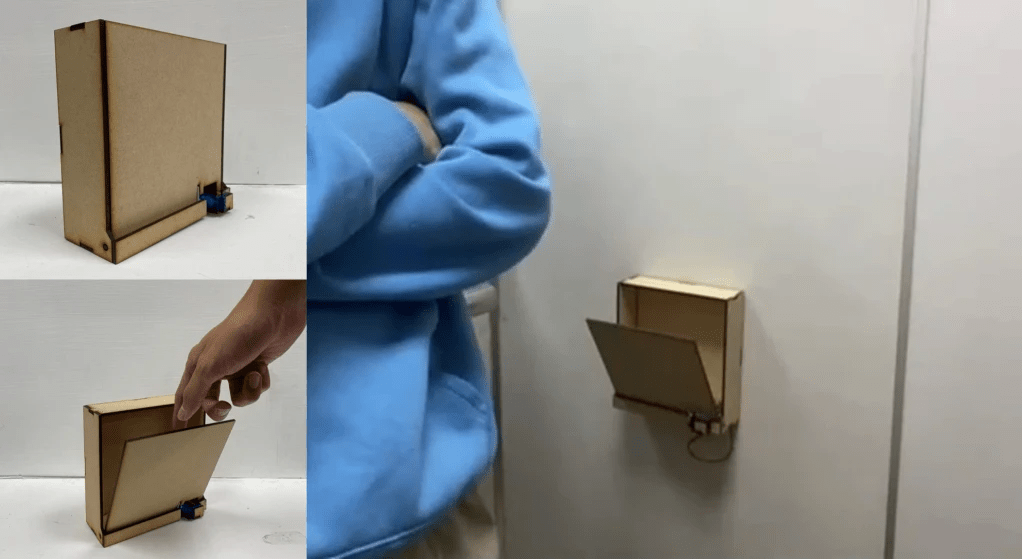
They are neighbors, but they never say hello to each other because of their hesitation. The best timing has passed, and now, if they meet in the elevator, silence and standing at opposite corners become the practice seemingly agreed upon by both partners. In this project, the designers tried to break the ice. A pair of small boxes in the elevator presents them with chocolates. However, they are not able to get it by themselves. Only if they cooperate they are able to get these small presents. A silent game starts, and this may be a good chance for them to find a new interpersonal practice.
Through My Glass (2020, 顏佳頤、林冠廷、陳泓齊)
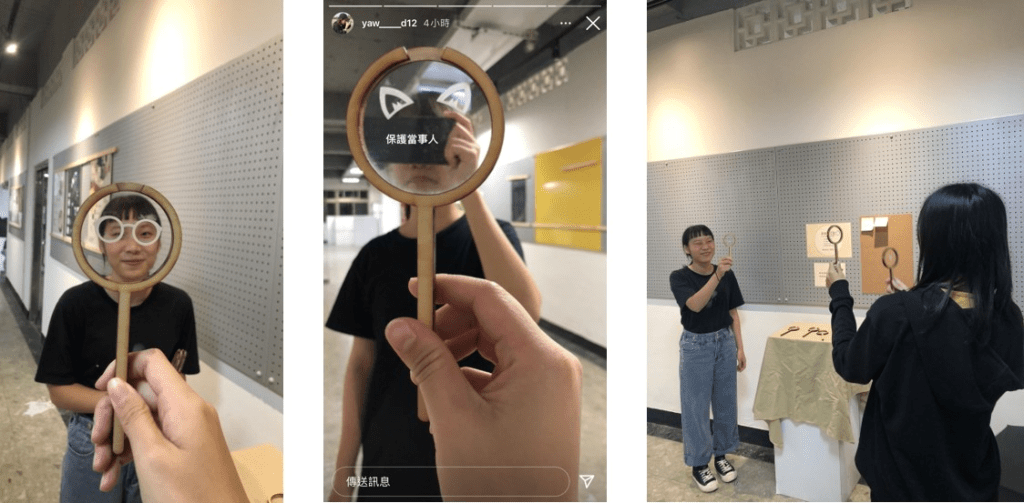
We see people from our perspective and vice versa. People do not trust each other because their perspectives are unrevealed. The designers tried to make our perspective present in interpersonal communication through design and designed this funny glass: “Yes, I look at you from my perspective, and here is my glass. As you can see… In my eyes, you are a lovely guy, like a cute cat.”
>> 2019 : An Alternative Daily Life (108上)
A Device for Escaping from Overselling Clerks (2019, 張盺荷 楊士玠 劉芃成 蔣念澄)
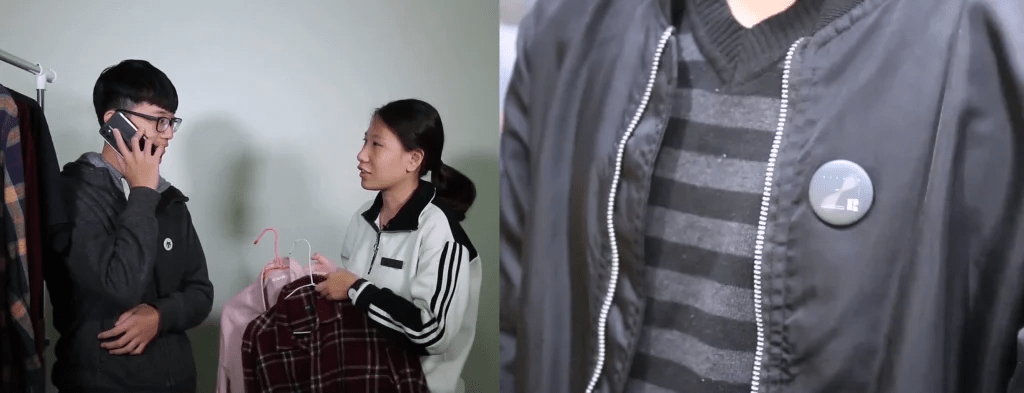
We enjoy shopping and exploring new stuff in stores. However, sometimes, a store clerk with a great passion for selling things destroys your pleasurable moment. She/he shows up and introduces ALL their products to you. You want to stop her/his endless talking, but you can’t. Then, you want to leave, but interrupting the clerk’s talk is, to you, impolite. There is no way to escape.
The designers conceptualize a wearable device. It is placed on your jacket and looks like a common decoration. When you are trapped by an overselling clerk, you can touch your secret device. This triggers your smartphone to ring. Answering your phone is, in any case, not impolite or unnatural behavior. When answering the phone, a dummy is talking and asking you random questions. You can answer those questions and see whether the clerk will leave you. If not, touch your device again, and the dummy will speak loud and provide an emergent situation. Now, you are pretty sure that the clerk is aware of your “situation,” and you are free to go!
Topic Restaurant (2019, 楊郁葇 許祐庭 方藝璇 張綺珍)
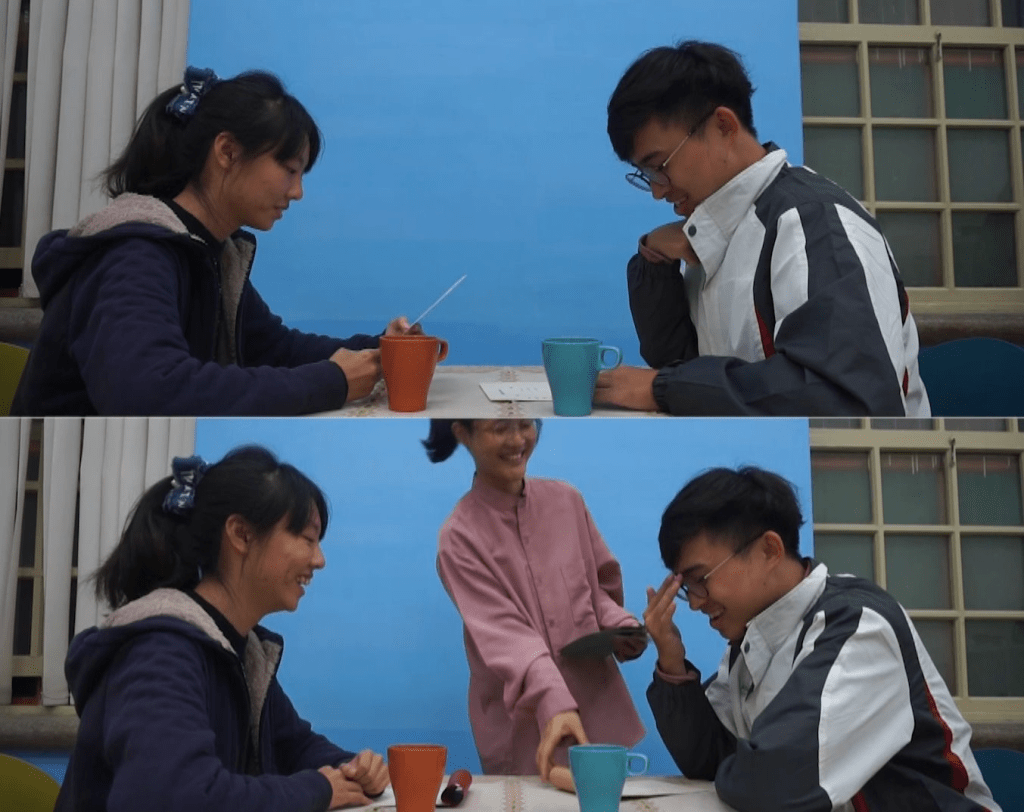
Not everyone is active in social activities. Often, when one’s value is inconsistent to society, one tends to avoid unnecessary social activities, such as talking to strangers. The dispute of values is frustrating, especially when the others consider theirs as “general.” But what if we can uncover those values before a social activity starts? Topic Restaurant provides this opportunity. You can sit together with a stranger there. Before you start a conversation, the waitress would come to make your orders. However, no menu is provided. She shows up with a menu in hand and a “difficult” question, “Would you prefer to spend your rest of life with a mermaid or a reverse mermaid?” – a question making nonsense. In this case, the waitress is the one breaking the “common” social value by giving a “weird” situation. Still, you and your guest have to react. By observing the reactions of your guests, you might know whether you should do more self-disclosure or “behave normally” in the rest of your interaction.
Making Friends in Taiwan (2019, 陳宣蓉 林佳儀 洪彩恩 張心洛 楊宜清)
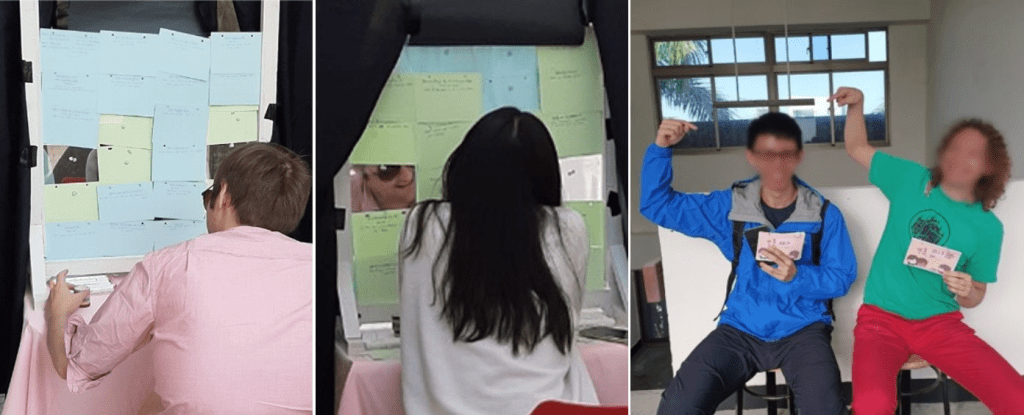
NCKU is a university that has more and more international students. The university is located in an old city with various delicious foods, friendly citizens, and many cultural attractions. However, surviving here without the ability to speak Taiwanese or Chinese is almost impossible. Therefore, friendship is definitively the most important part of international students’ stay. The designers organized a social event. International students, as well as local students, were invited. The organizers grouped participants into pairs, and each pair contained one foreign and one local student. The pairs were guided to a room and sat at a table in front of each other. But they can still not see each other because a glass covered with question cards is seated between them. The questions were designed to help the pair get to know each other. Some questions are easy, and some are entirely personal. The participants took down one card each time and asked the question on the card. By removing the cards from the glass, the pairs could see each other. The more questions they had answered, the more they could see each other. Finally, they could collect the cards and… win the friendship!
A Movie Night (2019, 彭程 許庭瑜 鄭以欣 陳予柔)
>> 2018 : Meaning Creation (107上)
An Empathy Game (2018, 邱芊頻 & 鄭靖非)
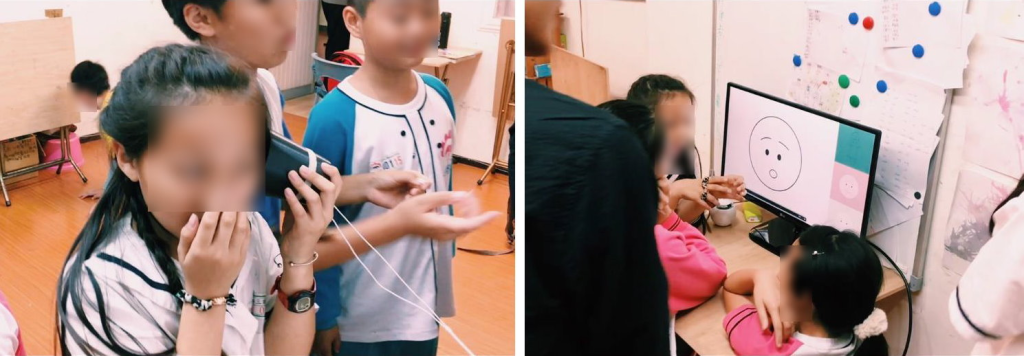
Designers created a virtual character with low confidence. Children should “talk to” this character over a speaker and, by performing their empathy skills, try to help the character become a happy partner in the game.
Messages (2018, 黃心郁 & 陳亭方)
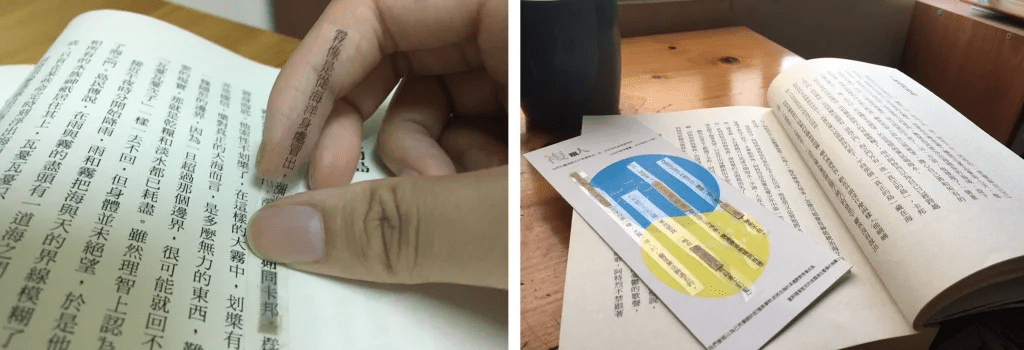
I am so eager to tell you how much fun I had in this book, and I wish so much that you can experience what I have experienced… In this project, one can select text pieces in a book and transform them into text stickers. The stickers are hidden in the original text and are waiting to be discovered by the partner. When the partner is reading the book, s/he collects the stickers, and finally, the collection of texts reveals the friend’s words that s/he wants to deliver to her/him.
 xtdesign.org